
Why Emotional Regulation Matters
Starting school is an important milestone for children and their families. New teachers, friends, uniforms, and routines. It’s exciting, but it can also be overwhelming.
When we talk about school readiness, we often think about reciting the alphabet, counting to 100, and holding a pencil correctly, and those skills are helpful. But emotional regulation in children is just as important. In many ways, it’s foundational.
At Overnewton Anglican Community College, we see this every year in our Prep classrooms. Children who develop emotional regulation flourish in this new environment and settle into school life with confidence, curiosity and a love of learning.
What is emotional regulation in children?
Emotional regulation for children is the ability to recognise feelings, express them appropriately and recover from them. It’s about learning how to manage big emotions.
For a five-year-old, that might look like:
- Taking a breath instead of pushing or yelling when things don’t go as planned
- Asking for help when something feels tricky
- Coping when a parent or guardian leaves at drop-off
- Waiting for a turn during a group game
These are essential skills that don’t necessarily come about naturally, and they certainly don’t appear overnight. They develop gradually, through relationships, modelling and practice.
Why does emotional regulation matter when children start school?
When young children start school, their brains are processing a huge amount of new information. If a child feels overwhelmed, anxious or dysregulated, it can affect their capacity to focus and learn.
Emotional readiness supports learning because it helps children:
- Listen and follow instructions
- Build positive relationships with peers and teachers
- Persist when tasks feel challenging
- Recover after small setbacks
A child who can move from tears to calm with support is learning an essential life skill, and as adults, we call that resilience.
At Overnewton, we recognise that wellbeing and learning are deeply connected.
We help students develop the ability to recognise and manage their emotions, build positive relationships, and regulate their behaviour - skills that support children to feel secure as they make the transition from early childhood education to Prep.
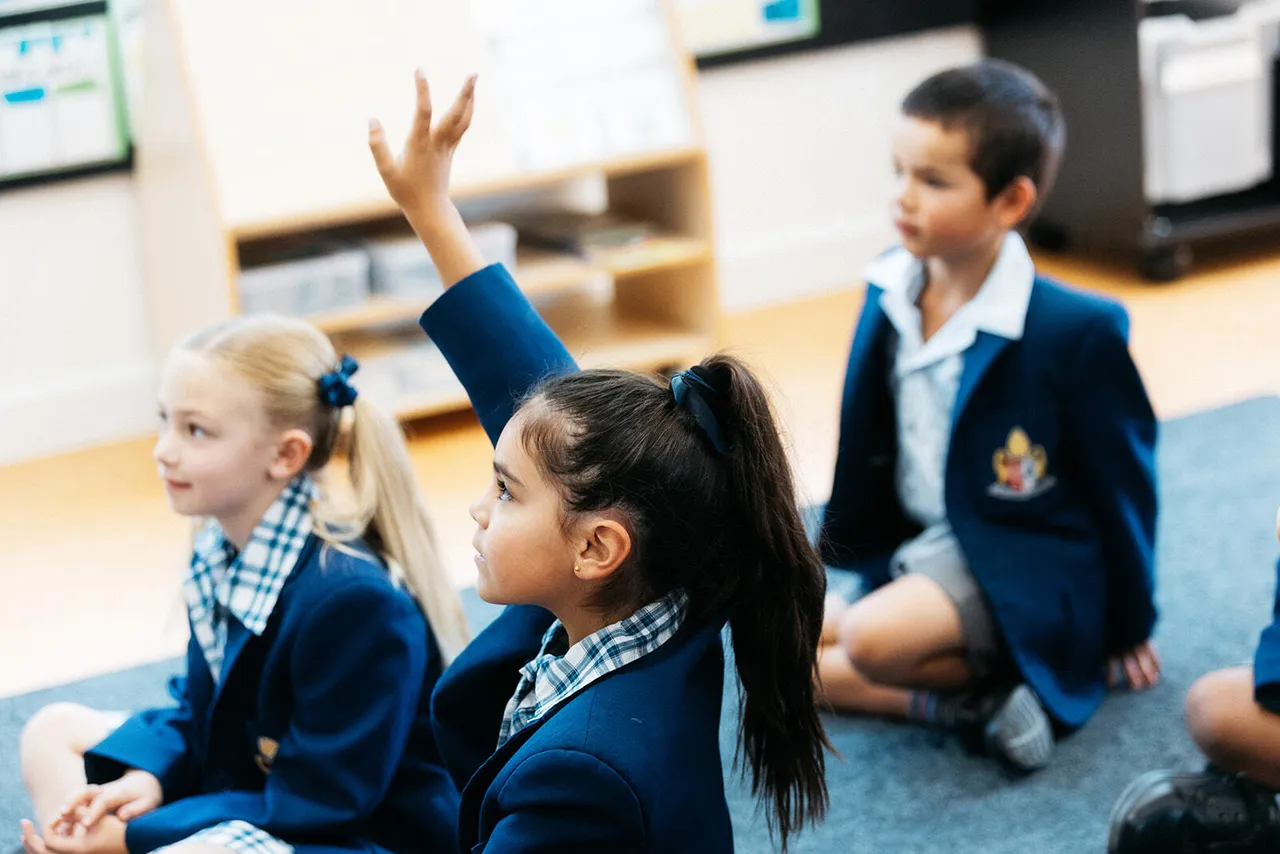
Is it normal for children to struggle with big emotions in the early weeks?
Yes. Completely. And for parents as well as children, those first few weeks can be very challenging.
Starting school often brings:
- Separation worries and anxiety
- Tiredness from longer days and a new schedule
- Frustration with new expectations
- Excitement that leans into overwhelm
These responses are totally normal, and they don’t mean that a child isn’t ready to start school.
Children develop regulation through co-regulation first. This means they learn from the calm, steady responses of the adults around them.
When parents and teachers respond with reassurance and consistency, children gradually internalise this, which sets the foundation for confidence and resilience at school and beyond.
In our Junior School, we create predictable routines and supportive classroom environments that help children feel safe and known.
How can families support emotional regulation at home?
Parents and primary caregivers play a powerful role in developing emotional regulation for children. Small, consistent strategies steer the journey towards emotional security over time.
1. Name the feeling
When your child is upset, try labelling it calmly. For example, “I can see you’re feeling frustrated.” This helps them build emotional vocabulary and awareness.
2. Model calm problem-solving
Children notice how adults respond to stress. If we pause, breathe and respond thoughtfully ourselves, they too will learn that pattern.
3. Practise simple emotional regulation activities for children
Play is one of the best tools for emotional growth. Consider:
- Turn-taking board games, like Snakes and Ladders, to practise patience
- Building tasks, such as with Lego and Magnet Tiles, that require persistence
- Role play such as playing supermarket, to explore social situations
- Quiet breathing exercises or soft mantras before bed
These sorts of fun activities gently strengthen emotional control without feeling like a lesson.
4. Keep routines predictable
In the lead-up to school, there is no greater tool in your kit than routine. Consistent bedtimes, morning patterns, and clear expectations help children feel secure. Predictability helps reduce anxiety that can otherwise progress into emotional dysregulation.
What does emotional readiness look like in Prep?
Emotional readiness doesn’t mean that a child never cries, lashes out, or becomes frustrated. Instead, it shows day to day as:
- Recovering after disappointment with reassurance
- Using words more often than physical reactions
- Seeking out a trusted adult for support
- Gradually building independence and courage
How do schools support emotional regulation in children?
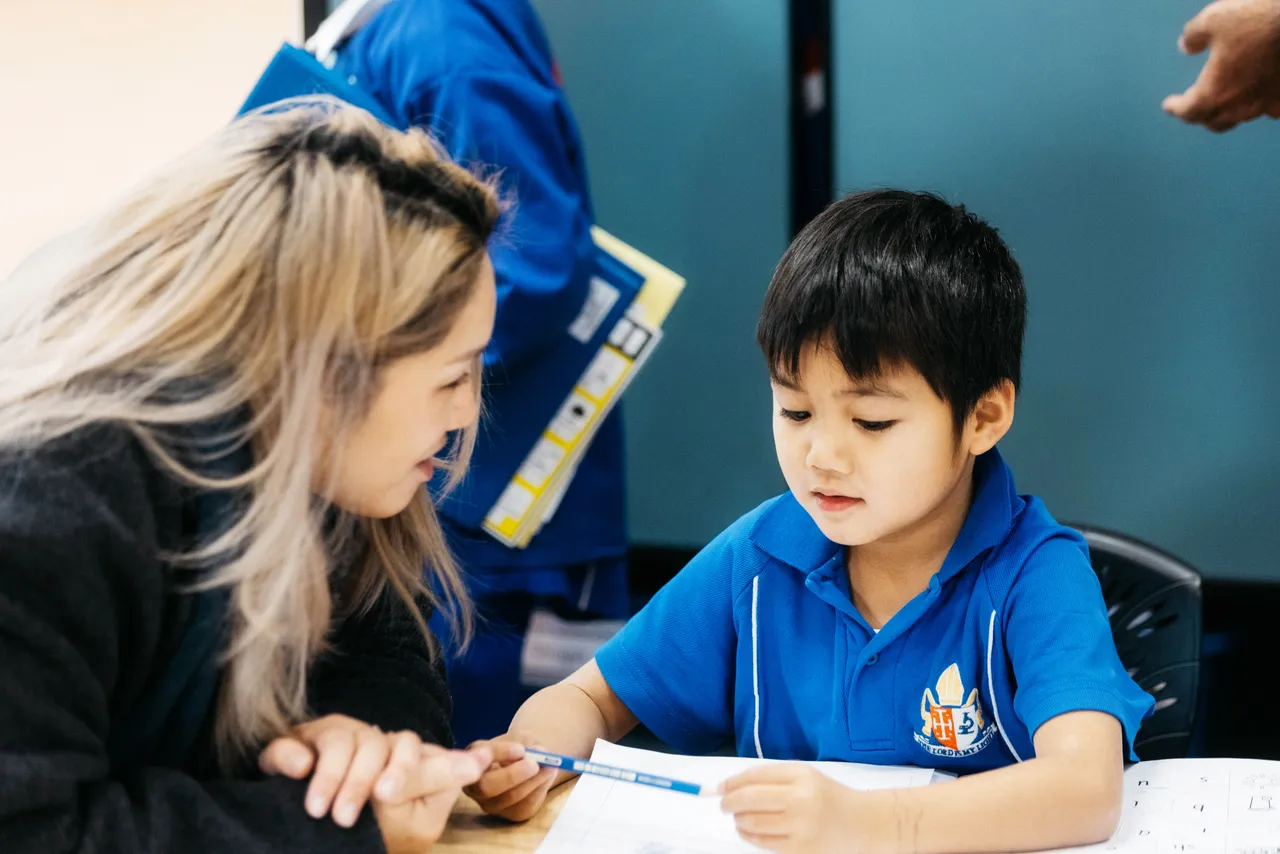
Strong home-school partnerships are incredibly important. When families and teachers connect, share insights and strategies, and communicate openly, children experience consistency between home and school.
In classrooms, teachers support emotional regulation by:
- Creating clear daily structures
- Teaching emotional language explicitly
- Modelling respectful interactions
- Offering calm spaces and quiet time
- Checking in regularly with students
Our Anglican ethos also guides our approach, calling us to nurture the whole child. That includes academic growth, but also character, compassion and emotional wellbeing. Young learners realise that feelings are human, and thoughtful responses guide their growth and character.
Growth & Kindness
At Overnewton, we understand that starting school is both joyful and challenging. We embrace learning as a lifelong journey and see emotional development as central to our culture of compassion, understanding and respect.
When children learn to recognise and manage their feelings, they gain confidence, build resilience, and begin to understand themselves and others more deeply. That is the beginning of something beyond just academic success: character.

We acknowledge and pay respect to the Marin Balluk people of the Kulin Nation, the Traditional Custodians of the Land on which Overnewton Anglican Community College stands. We respect the knowledge that will be forever embedded within the Aboriginal Custodianship of Country and remember the loss of cultures, languages and Lands they have endured. Like the Marin Balluk people, we at Overnewton want to respect the Land, the cultures and the heritages, and learn from those who have come before us in the passing on of knowledge and the teaching of life skills, as well as continue with wise stewardship of our buildings and grounds. We honour their custodianship of this Land and offer them our deep respect.